Journal of Ayurveda Case Reports
Volume 4 • Issue 4 • October-December 2021
doi: 10.4103/jacr.jacr_103_21
Dr. Antonio Morandi
Guest Editorial
Research methodology for Āyurveda and traditional systems of medicines: Practical difficulties and way ahead.
The conceptual framework in which nature and science are interpreted depends on historical, cultural, social, and economic factors. It is very well known that when comparing western and eastern perceptions of the world, different approaches are found: conventionally, for the West, the attention is directed “outward” while for the East, it is “inward,” this leads to reaching a balance respectively “outside” and “inside.” The perception of the “outside” is naturally limited by sensorial boundaries and it ends up in a fragmented view of reality, while the attention toward an inner primordial origin leads to a holistic perception of reality. The practical result of the “outward” attitude is evident in the field of modern science, dominated by western culture, where scientists see nature as made of separated items. These different substrates lead us to the diverse approaches to health and disease such as those of modern biomedicine and traditional medicines like Āyurveda.
However, nature is one notwithstanding the diverse human viewpoints, and a complete picture will result only from the collaboration of multiple perspectives.
The tradition of Āyurveda testifies the existence of a deep disposition to research since ancient times.[1] In this regard, the discussion exposed in the classical texts was essentially articulated on the validation of the knowledge processes as well as on the manifestation of diseases, the real efficacy of therapy, and the development of new formulations and protocols.[2,3] However, it was nothing like the research as an organized activity, as it is intended today in the biomedical field, this concept is something new for Āyurveda. Nevertheless, it is important to clarify that modern research, characterized by the scientific method, is an overall new concept which has been developed in the West only during the last four centuries. In this framework, biomedicine, for the undoubtedly great progress focusing on organs and systems, but also for the huge economic interests that have accrued,[4-6] has become the medical system of reference of the modern world, and its reductionist‐based thinking is dominant today in the medical scientific community.
In recent years, initiatives of study, research, and dissemination of Āyurveda’s vision and philosophy have proliferated not only in India but in the whole world. Research in Āyurveda is flourishing and, according to PubMed, the largest database of scientific papers in the world, in the last 7 years, almost 60% of total articles on Āyurveda produced from 1945 to the present have been published.[7] Not to mention the number of articles published in journals indexed in other databases than PubMed such as DHARAONLINE[8] or AYUSH Research Portal.[9]
However, very few of them have provided valid information useful to reveal the underpinning value of Ayurvedic principles and their applicability to modern environment. Most of these studies have been performed mainly according to the requirements of modern research in biomedicine, without any necessary adjustment based on epistemological diversities. Moreover, most of these studies have been done in vitro or in vivo, with just a few clinical trials.[10] Besides, research activities in Āyurveda currently do not follow a well‐defined strategy, the majority of the studies are sparse and misdirected, and they are in large part guided by the urge of proving the efficacy of Āyurveda according to the epistemological framework of modern biomedicine. Furthermore, a relevant part of the studies is focused on ethnobotany and ethnopharmacology, in the strenuous search for information that could lead to the discovery of new chemical entities.[1]
The assignation of the 2015 Nobel Prize in Physiology and Medicine to Prof. Youyou Tu for the identification of an antimalarial drug derived from a herb used in a traditional Chinese medicine is actually a signal of a potential danger. The event has been considered by many an official legitimization for traditional medicine; however, this is not true. It is rather the opposite because this finding has been made using the conventional scientific method of drug discovery, neglecting the complex Chinese medicine’s pharmacology, its epistemology, and approach to health and disease.[11] This could drive into a mislead enthusiasm in pursuing a reductionistic pathway even in the traditional medicine environment. This risk is also very present for Āyurveda. As a matter of fact, research based on the isolation of active principles and the search for the “golden bullet” drug is a widespread attitude present in the ayurvedic to shape community, which is reinforced bythe glamour of modern science findings. This behavior, neglecting the very essence of Āyurveda’s Dravyaguna, which uses complex algorithms to combine herbs and other materials in order to obtain a synergic effect, could lead to the progressive loss of the holistic perspective of Ayurvedic epistemology... [continua]
➔ Scarica l'articolo completo (PDF )
➔ Vai al numero online della rivista
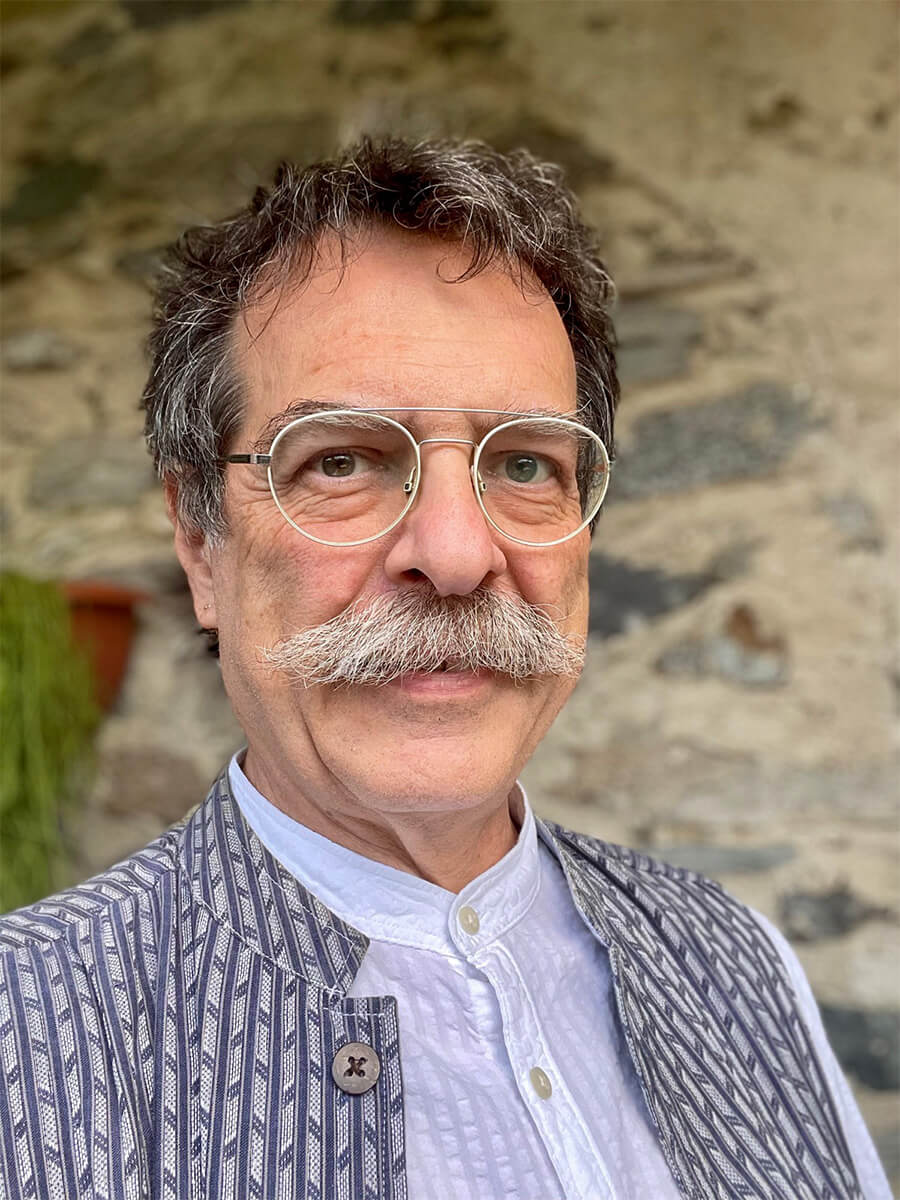
Dr. Antonio Īśvara Morandi
Direttore della Scuola Ayurvedic Point
Medico, Neurologo ed Āyurveda Vaidya (Āyurveda Academy, Pune, India - Joytinat International College of Āyurveda), è co-fondatore, assieme a Carmen Tosto, di Ayurvedic Point di cui è Chairman e Direttore dal 2002 della Scuola di Āyurveda “Ayurvedic Point”, certificata ISO 9001:2015 e il cui Corso per Tecnici è qualificato secondo la normativa UNI 11756:2019. Il Dr. Morandi è anche Presidente della Società Scientifica Italiana di Medicina Ayurvedica (S.S.I.M.A.)